


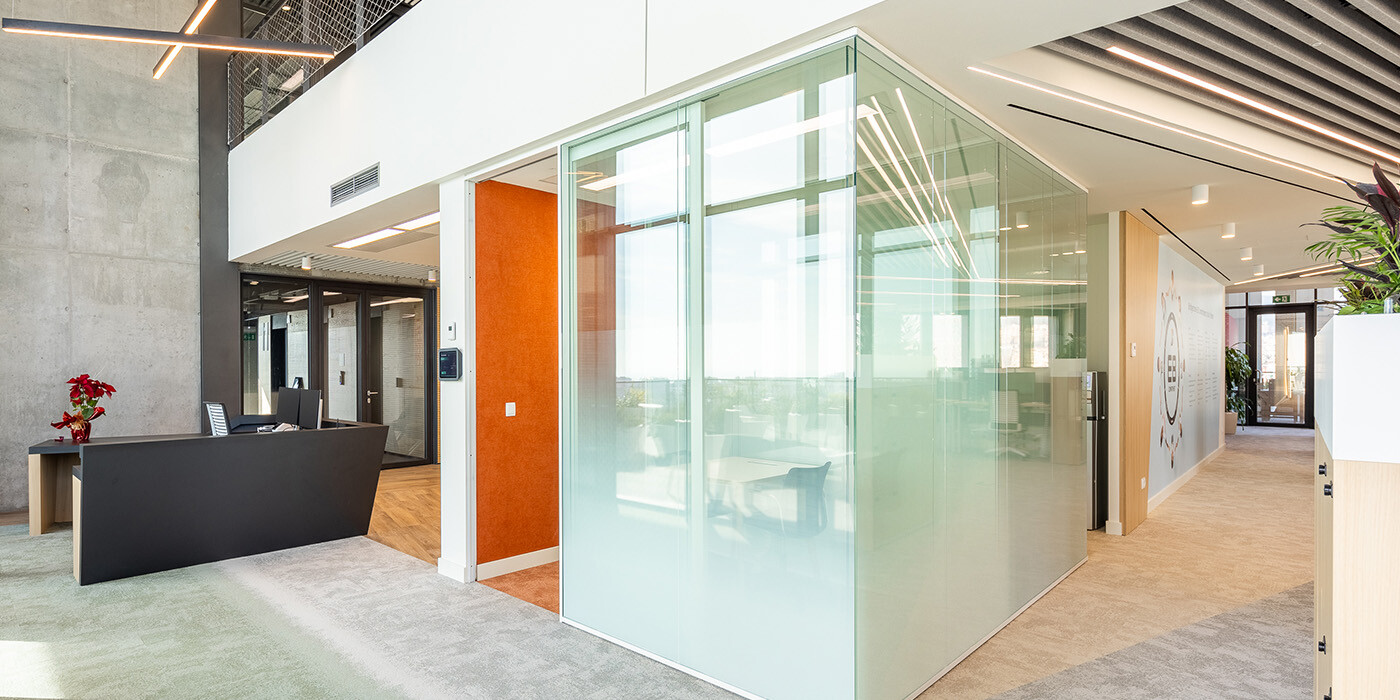
In the heart of Barcelona, specifically in the innovative 22@ district, emerges the new headquarters of Bridgestone Mobility Solutions in Spain, conceived to be a global benchmark in hybrid offices. The technology subsidiary of the Japanese multinational expert in fleet management has been established, under the turnkey modality of Grupo Cador, on three floors of a striking newly built building, with industrial design and LEED Gold certification, located in a prime area, which also houses technology giants such as Facebook, Glovo, Amazon, and Oracle.
The project faced the ambitious objective of creating a space that was not only modern, attractive, and of a high level of comfort for employees, but also integrated the recognizable image of Bridgestone internationally, while capturing the essence of Barcelona. In addition, the office aspired to position itself as a leading innovation center, a leader in sustainability and technology, adapted to collaborative and hybrid work and promoting continuous training.
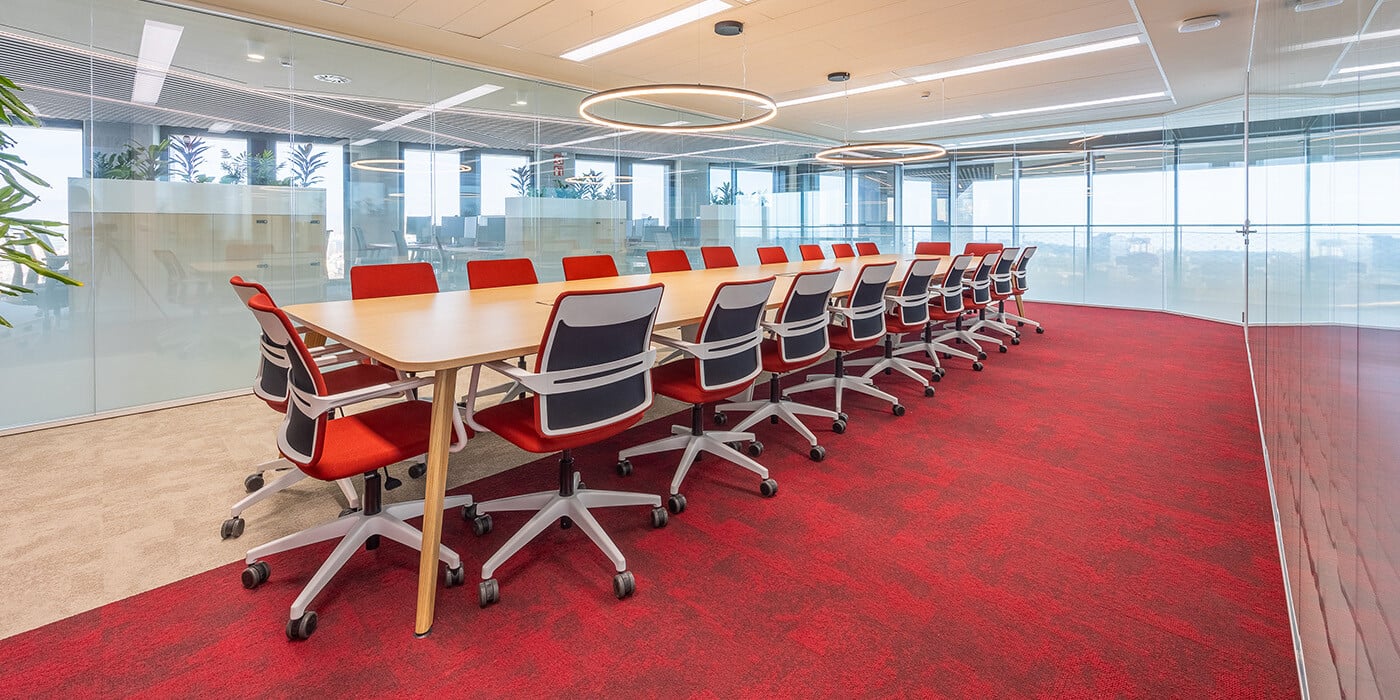
The workplace strategy was based on an exhaustive analysis, which included a visit to the previous headquarters and the company’s offices in Amsterdam and Brussels, as well as a detailed occupancy study and interviews with stakeholders and the core team. This allowed us to gather key insights to design spaces that foster collaboration, creativity, and user well-being, adapting to their real needs. From this process, the implementation of areas such as a brainstorming zone, game room, demo area, and sprint rooms, intended for agile methodologies, arose.
To respond to the challenges of the project from the interior design, the concept was articulated on four pillars: corporate identity, sustainability, advanced technology, and Barcelona.
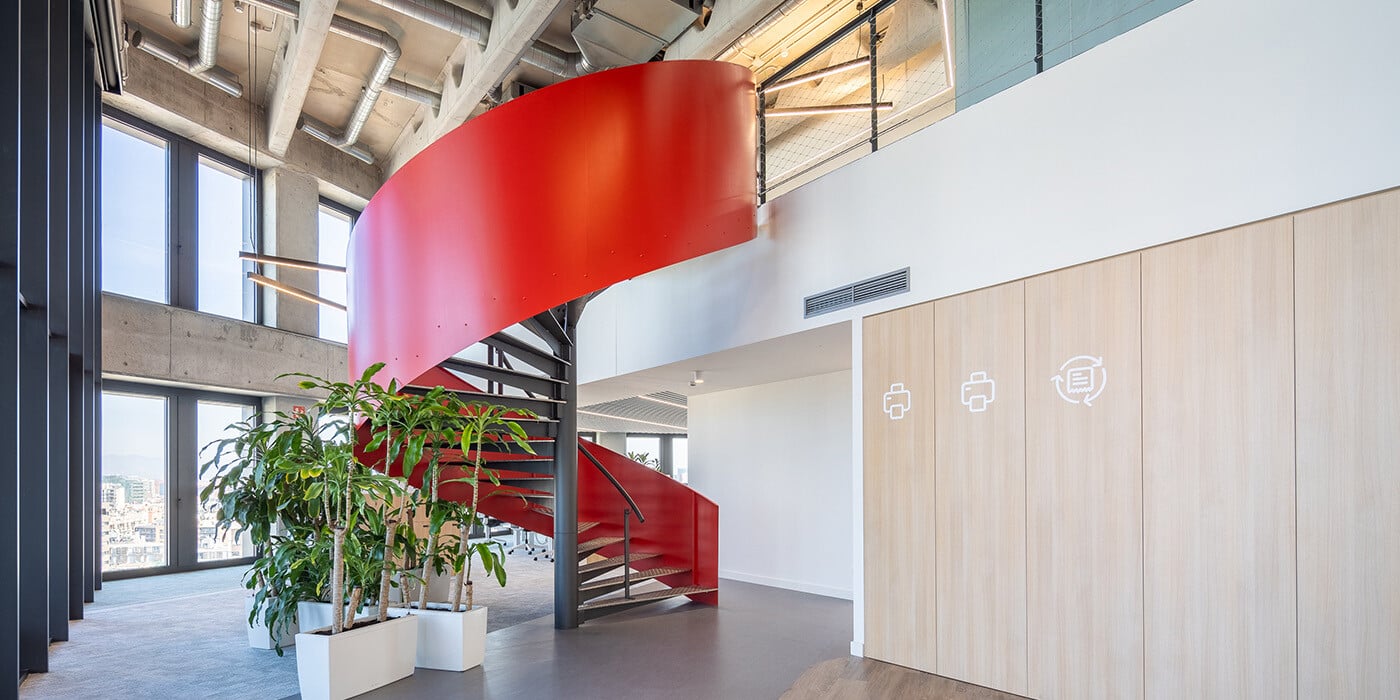
The corporate identity is incorporated through the strategic use of the Bridgestone logo and corporate decals in key areas, the application of the brand’s color palette in a variety of elements such as vertical and horizontal claddings, upholstery, furniture, and an imposing metal staircase that connects the last two floors, and, finally, with the use of straight lines that convey innovation and also help guide the flow within the office, giving it dynamism.
Biophilic and Glocal Design
Sustainability has been addressed through the use of ecological materials, such as carbon-neutral carpets, low-consumption LED lighting, and a commitment to biophilic design, which promotes a healthy environment. In this sense, vegetation has been incorporated, natural light has been maximized, thus also reducing energy consumption, and ergonomic furniture has been selected. For example, all tables are height adjustable.
Acoustic comfort has also been one of the priorities of the project. To avoid aspects such as reverberation, false ceiling tiles with acoustic properties, sound-absorbing slats, acoustic panels on the tables, double-glazed partitions, and carpet have been installed.
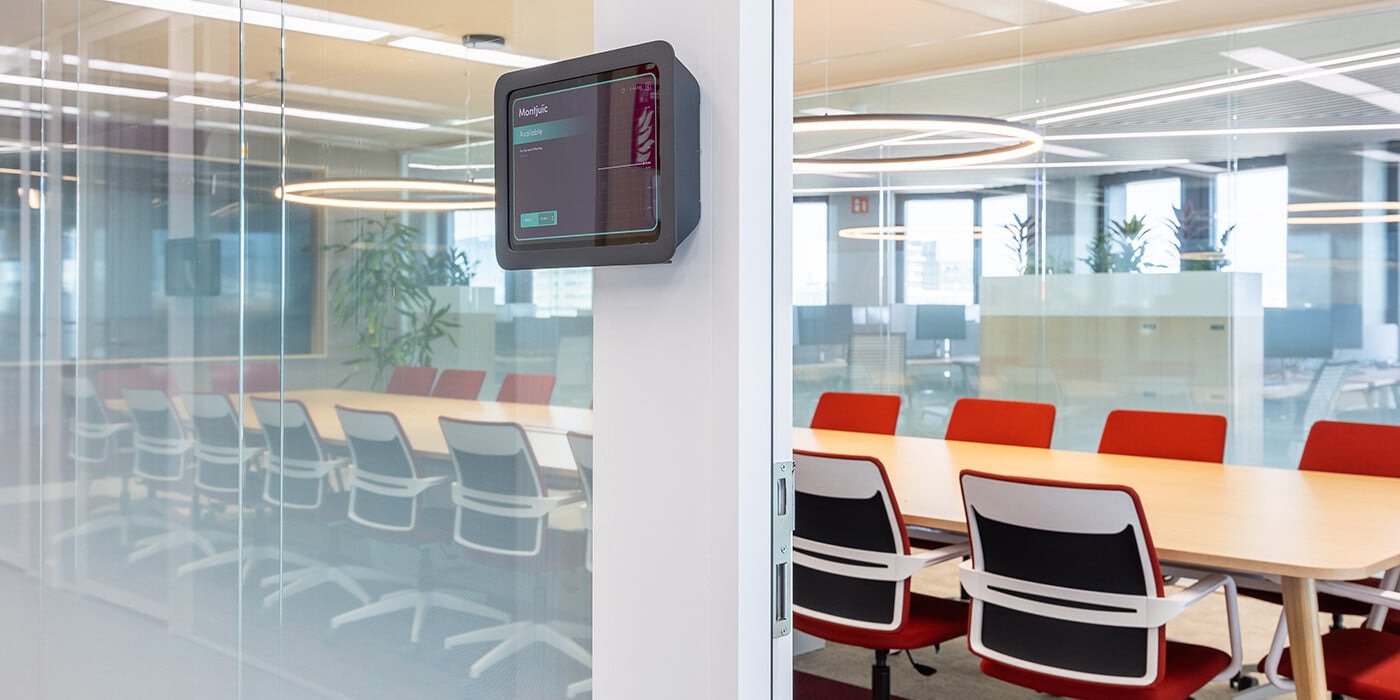
For its part, technology is present through a state-of-the-art IT infrastructure, cutting-edge video conferencing systems in all meeting rooms, and the spectacular technological demonstration space, near the impressive custom-made wooden reception.
The design is configured under a ‘glocal’ perspective, in that this office shares an image with its international counterparts and pays homage to Barcelona. The diagonal, a corporate element of the company and a reference to the famous avenue of the city, is the protagonist on the floor and ceiling, presenting the same cutting lines, also on walls, upholstered fronts, vinyl cutting, paint, acoustic slats, as well as in the recessed lighting or backlit wood panels.
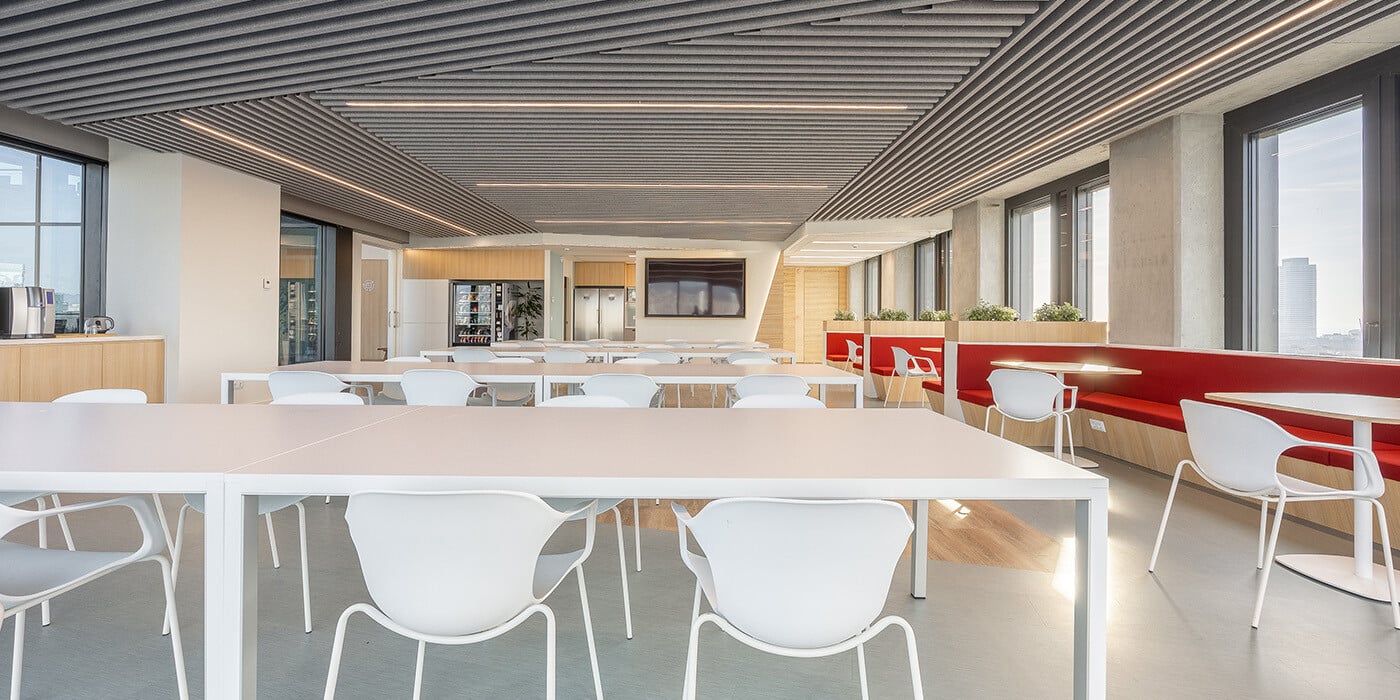
In addition, the names of the rooms correspond to recognized places in the area (Montjuic, Tibidabo…) and the outside-in approach, through color, achieves the sensation that Barcelona enters the office, with blue representing the sea in the areas closest to the facade, passing through terracotta tones, until reaching the heart of the office, with a range of garnet and red, typical of the brand.
As for the technical team, it has managed to materialize this complex vision with a tight schedule, which has required close collaboration with direct manufacturers to ensure the availability of materials on time and overcome logistical and construction challenges.
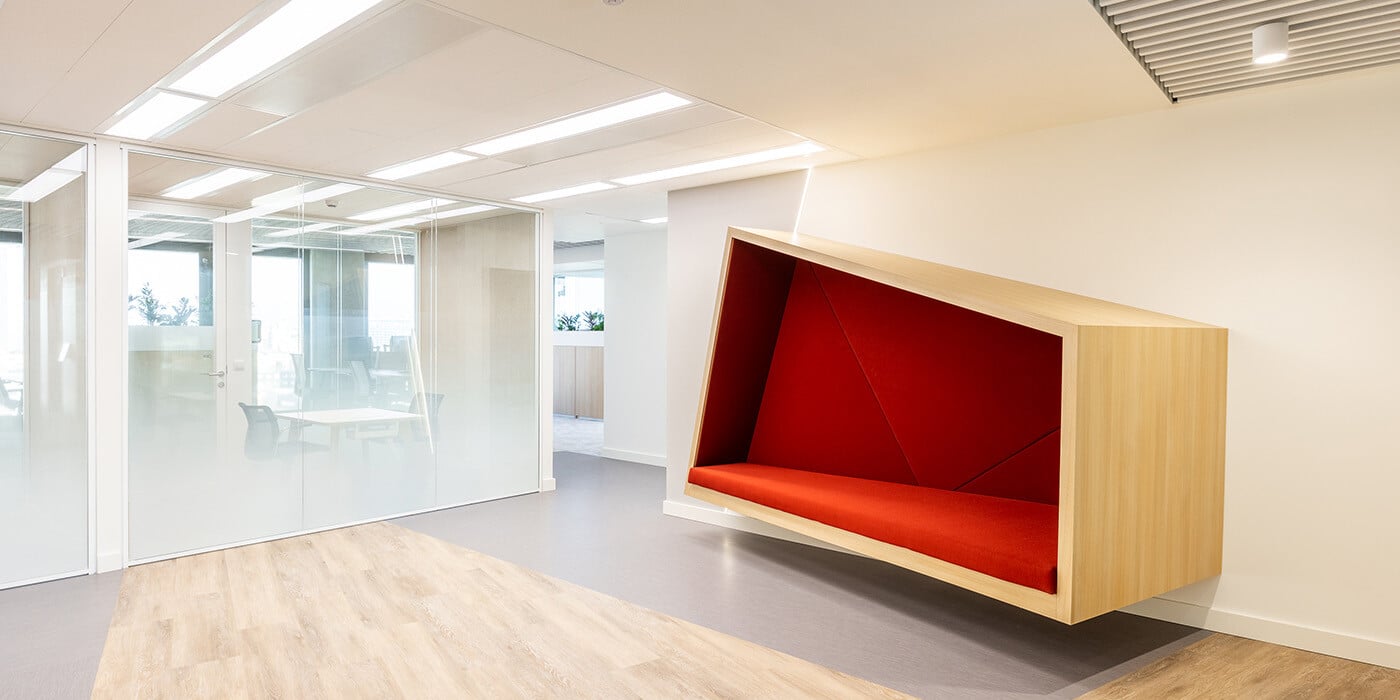
Among the latter, it is worth mentioning the construction of a built-in wooden bench, suspended up to one meter deep on one of the sides, which has required an internal metal structure, reinforcing the wall and a double plasterboard partition. Also the installation of the false ceiling of slats and acoustic panels, since the ceiling beams could not be drilled.