


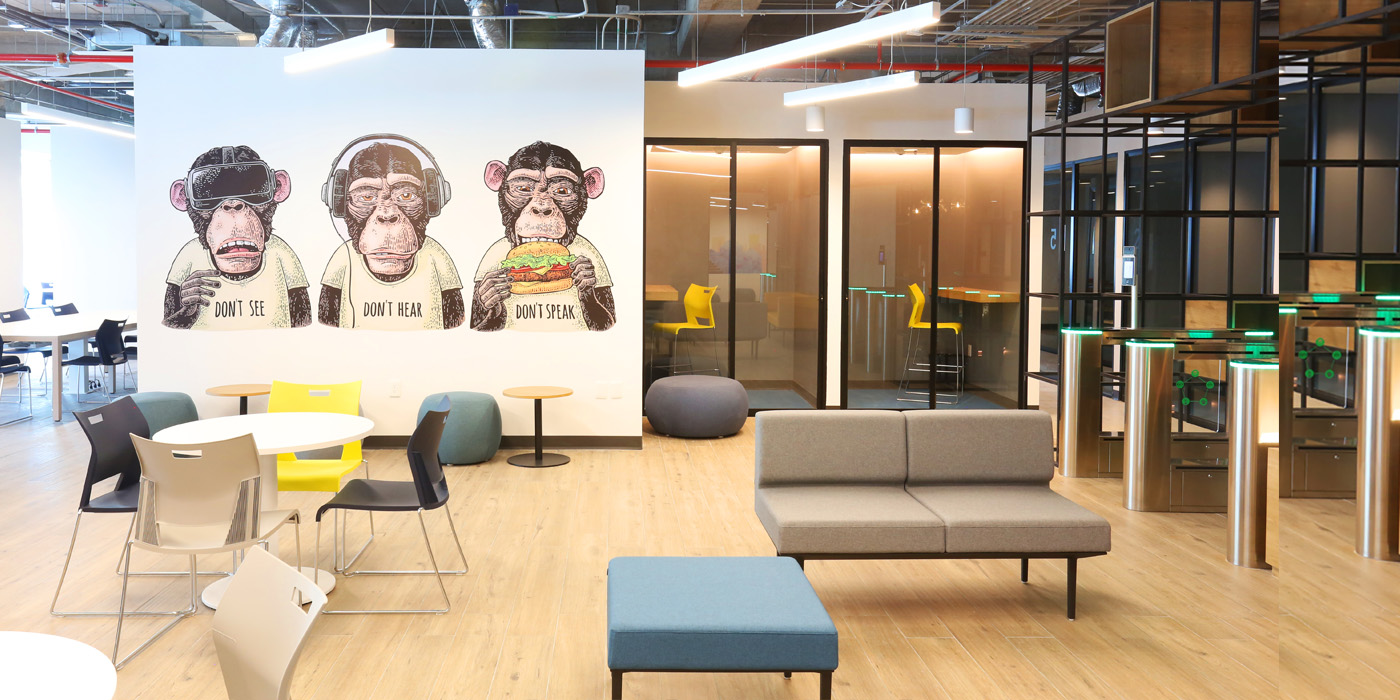
Companies work very hard to build a brand that, with a unique message, projects values and is consistent with objectives.
But what does your office say about your company? What image do you convey to your employees and customers? What can you do to fix it?
Workplace strategy experts at CADOR explore the lessons that can be learned from branding to align your company’s design with the brand strategy.
Currently, brand strategies try to cover all types of channels internally and externally, since it is considered that each point of contact can influence the perception of the reputation that your company reflects. But what does your workspace convey?
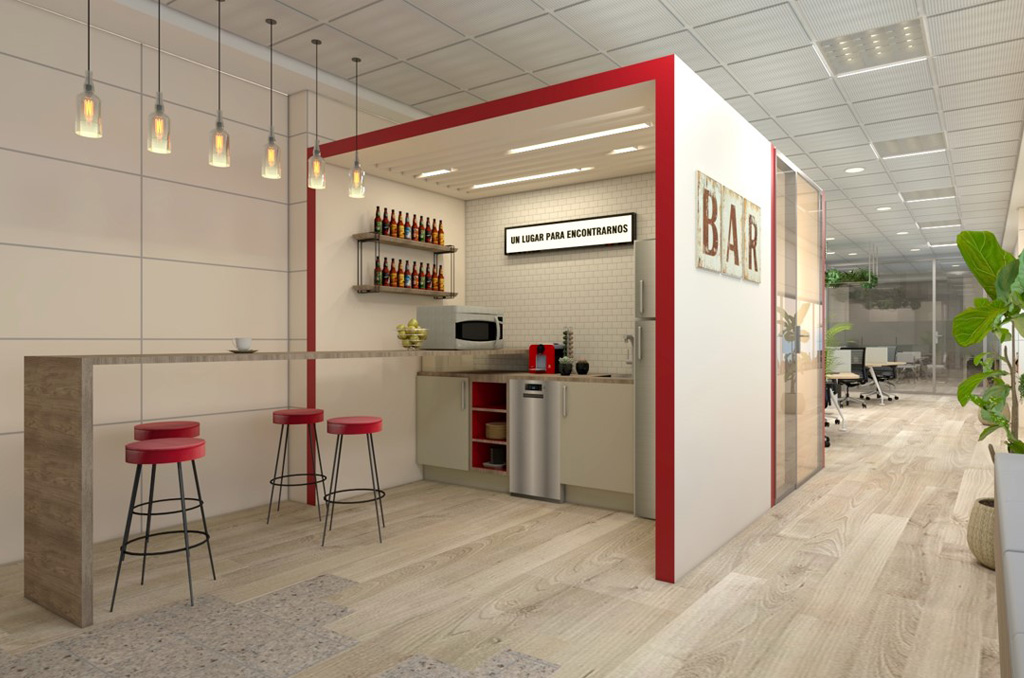 In traditional office design the emphasis was on showing the company’s values. It was about responding to the specific needs of users, with the image being an important but secondary element. However, the generalization of hybrid work has opened our homes and offices to the outside, forcing us to show the place where we work and turning telematics meetings into unexpected showcases of our workspaces.
The perception of our clients is no longer limited to the reception and a small number of meeting rooms. The corporate image therefore becomes a crucial element and our workspace is a 3-dimensional representation of our brand. All this means that we have a great opportunity for companies.
Not without strategy

The perception of your office by your customers should not leave anyone indifferent, so it is essential to define a strategy: decide what you want to say and how to achieve differentiation and consistency.
We all know the famous offices of the big technology companies, which include slides, food, foosball tables, etc., which are novel elements to show in the news. Even the employees themselves become ambassadors of the company, showing off their workplace.
But not all offices need slides. If our customers come first, we will incorporate spaces where they feel welcome. If our company wants to show its commitment to the environment, we will have recycling spaces and put water fountains at the disposal of workers, and if we want to talk about labor flexibility, we should not do it from rigid and monotonous spaces.
Internal and External Branding
The goal is that both our customers and our employees identify with and want to be part of our brand. Thus, we must be honest and offer a consistent message that goes beyond a couple of inspirational phrases on a wall.
Your brand is what people say about you when you’re not in the room” Jeff Bezos, Executive Chairman of Amazon.
If we understand offices as one more element of brand communication that allows us to transmit our company’s message, we will create environments that improve the well-being and productivity of our workers, thus turning them into ambassadors of our company. And this good internal perception will help attract and retain talent.
Rubén García, Director of Business Development and Marketing at Cador
You may also be interested in: The 5 Aspects that a Perfect Office Should Have