


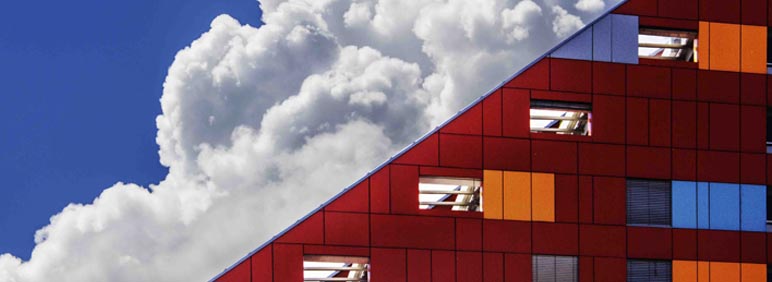
Bioclimatic architecture has revolutionized the way new buildings are constructed and designed. However, this is not a relatively new term. We find articles from the year 2000 in which Dr. Flavio Celis D’Amico (Professor of Architecture at the University of Alcalá) offered a basic reading of the concept.
Celis D’Amico’s idea about this type of design appeared when the first works carried out were subordinated only to energy saving. Currently, the key point has transcended towards understanding this model of bioclimatic architecture as an active process and as a broader system. It ranges from energy concepts to aesthetic and functional ones.
Thus, no matter how many fans are placed, they do not hide the structural failure of the building. Today, the concept of “bioclimatic architecture” has become popular. It encompasses the design of buildings taking into account the climatic conditions in which it is built. Existing environmental resources are valued and used to the maximum to reduce pollution. Both in its construction and in the subsequent use that the building will have.
Currently, several studies have demonstrated the economic viability of this type of building. The savings are around 60 to 70% in energy costs. Other companies in the sector point to a slightly higher cost in this type of building, but the investment is amortized from the fourth year.
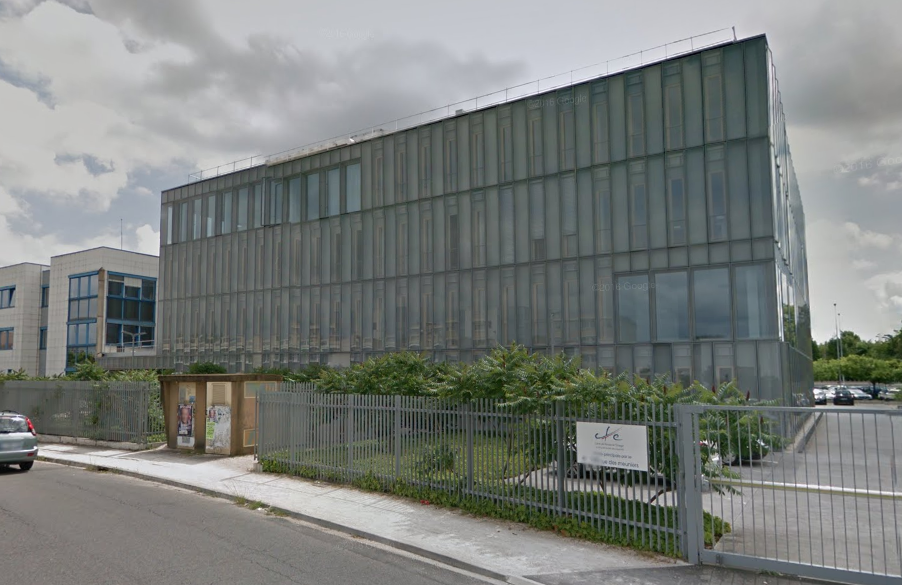 Caisse des Français de l’Etranger: example of a building with a bioclimatic cladding facade.
There is a type of low electrical consumption cooling using an automated system, it is the night ventilation. Thanks to its automation through a computer, it is considered a good method to “predict comfort”. Doesn’t having a ventilation system running all night mean a higher cost? There are economic options that contribute to reducing the environmental impact, the best known and used are solar panels.
The advantages of night ventilation, in addition to the environmental advantages, is its automatic management. Thanks to it, the operating hours, the temperature, the areas in which it will be done, the intensity and the desired temperature are programmed. It is presented as a comfortable and easy-to-use format, applicable throughout the year. For us, the most notable is the saving in space and the aesthetics of the office. It allows dispensing with mechanical fans that occupy and distract, in addition, they expand the space they leave to move or redistribute the furniture.
Did we think that a functional, aesthetic and environmentally friendly office was impossible?
You may also be interested in: Your office built with 3D printers?