


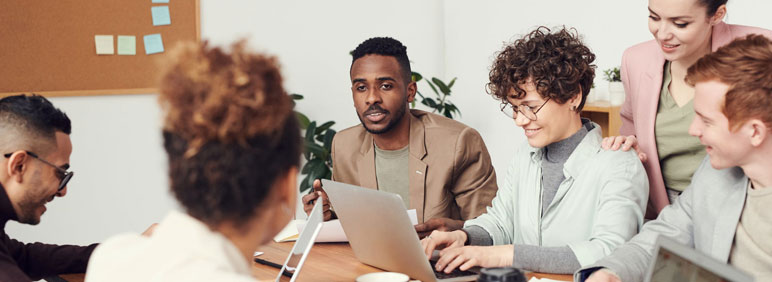
In just a few decades, work offices have undergone a surprising transformation. Workplaces have not always had open and collaborative spaces as they do today. Fortunately, in almost all jobs that allow it, we have gone from overwhelming personal cubicles to spaces where interaction and spaciousness considerably improve both the work environment and work performance. In addition, nowadays it is common for offices to have a cafeteria or other similar place to take short breaks and socialize with other colleagues.
Many of these changes have come about with the incorporation of millennials into the labor market, and companies’ strategies to achieve their job retention. While there are still companies that are adapting to these changes, the emergence of Generation Z is imminent, and is beginning to leave its mark on the labor culture and customs of companies.
Generation Z is made up of young people born from 1995 onwards. They are people who were born in the digital age, and therefore have grown up using Facebook, Instagram, Twitter, Youtube, and surfing the internet. It is estimated that within 5 years, 1 in 3 workers in Spain will belong to Generation Z.
We have already talked about the impact that the millennial generation had on offices, but how will the new Generation Z influence the design of work spaces?
- The new generation prefers a workplace that combines the best of home and the facilities of a job, that is, they want to have comfortable spaces in the office, rest areas, good lighting, and different areas available depending on the tasks to be performed, rather than a fixed position. For them, having large spaces and not feeling “tied” to the same table throughout the day is essential.
- They are also more aware than previous generations of the importance of health, and how quality of life is related to work success. That is why they will prefer healthy and comfortable environments, with ergonomic furniture that promotes correct posture.
- Digital natives tend to be communicative and open, so they prefer horizontal relationship spaces where they can interact with their superiors in a fluid and natural way.
Generation Z has a lot to contribute to companies, they are decisive and seek to tackle problems in the most effective way possible. As digital natives, they have great skills and aptitudes in the digital environment and social networks; in addition, they are self-taught people, accustomed to staying in continuous training permanently.
The incorporation of this new generation will continue to deepen the changes that millennials have already begun to demand in companies. The trend will be collaborative spaces where workers of any generation, with different skills and specialties, can fit. The biggest challenge will be the ability to help workers generate those symbioses that can be very beneficial for companies. An adequate workspace, which favors relationships and makes all employees feel good, may be the key to achieving this.