


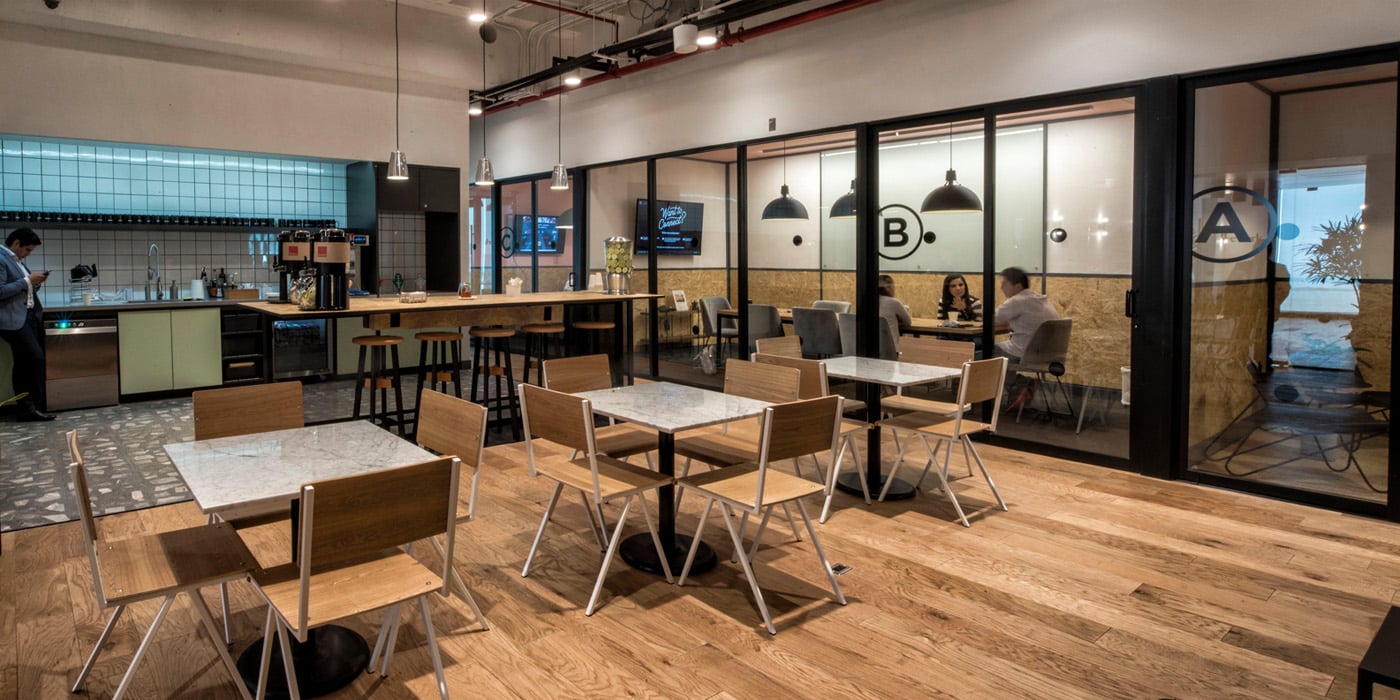
Cador, with 42 years in the office market, together with one of its most experienced directors, analyzes the revolution and evolution of the office market, offering a vision of the future of workspaces.
The evolution of office design in four decades
In these almost 40 years, from the mid-1980s to the present, we have all changed a great deal: companies, people, and workspaces. We have changed in the way we view life outside and inside the work environment, personal work versus teamwork, pyramidal companies in decision-making versus more transversal companies in their relationship with people and in business decisions.
In the eighties, the prevailing concept regarding the design and construction of offices was fundamentally closed spaces, with a provision of positions where people worked according to the space available to the company and not the space that each employee needed to develop their work, trying to comply with current regulations.
The offices were all more or less similar in terms of design. The differentiating factor was the type of furniture used, of higher or lower level, as well as the wood finishes in the divisions and the different finishes in the floor coverings. In the offices in those years there were two priorities: acoustic independence and visual independence. As a general rule, they were blind separations, which marked the distance with the rest of the workers and served to determine the status of those who occupied them. Concepts such as the finishes in the compartmentalization, the type of furniture, the dimensions of the offices differentiated the design of the offices, both of large multinationals and of SMEs.

Little by little it evolved to interdepartmental collaboration, opening spaces and making offices only for area managers, generating more camaraderie and communication.
In this era, some companies begin to have internet. From 1985, multinationals began to establish it, while in SMEs, which is the most numerous network of companies in Spain, it takes a little longer to arrive due to the cost involved. Thus, we understand that Internet does not begin to materialize until the 90s, being in 1998 when it begins to enter Spanish homes, thanks to the operators, which revolutionizes the way of life of people and especially the way of working known until then.
Meadows, unassigned positions and ecology
Later, the concept of more open areas or spaces in terms of compartmentalization was implemented. The concept of open areas “meadows” was born in New York and is attributed to the Italian architect Gaetano Pesce, who in the mid-90s designed the first office with this novel concept, for an advertising company.
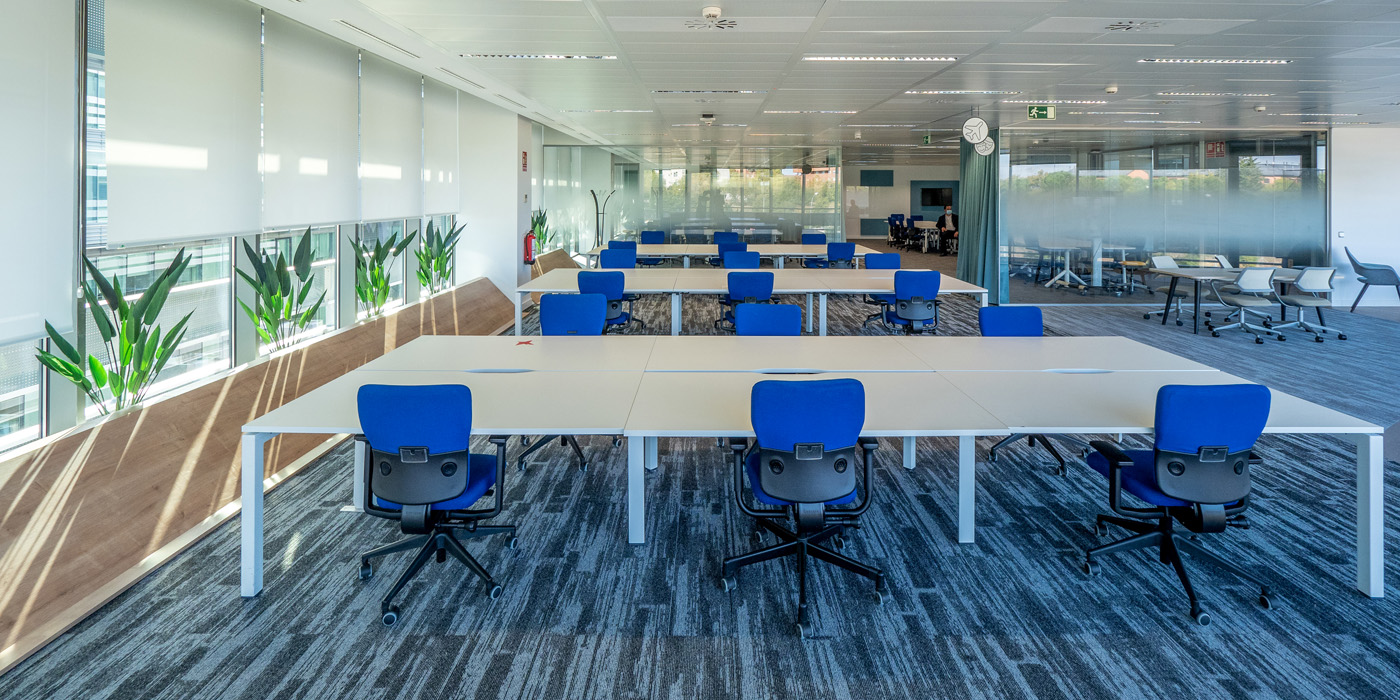
At the end of the 90s, new concepts began to appear such as “unassigned positions”, concentration spaces, collaboration spaces, with which the office begins to undergo a new change. The spaces are increasingly open, there are areas of interrelation of the different teams, and at the same time areas are created for concentration. Technologies accompany these changes, the mobility allowed by mobile phones is available, the internet is a source of information where to go and get it quickly, people start traveling less, because technologies also allow us to hold meetings between people with different locations, having acceptable communication and allowing us to somehow maintain closeness, by being able to see each other making video calls and without having to make so many trips, with the consequent savings that it implied for companies. Thanks to technologies, arguments not only of economic savings, but also of concern for nature, begin to gain strength, appearing the term “ecology”.
Unfortunately, the evolution of these concepts to certain sectors and to certain more traditional companies does not become, as a consequence of the crisis of 2008 until 2014. It is from this moment when all these concepts are re-promoted again, as well as concepts that are not new such as ergonomics and flexibility, concepts that began to be talked about at the beginning of the 20th century. There have always been companies that sign up for new trends, implementing all the concepts in their organizations and that the rest call them “modern”. On the other hand, there were those who clung to the old concepts of offices, non-visibility, soundproofing. Throughout these years, it has permeated the different layers of the different companies, reaching today to be all from large corporations to SMEs, imbued with all these terms, having the new philosophy incorporated into the company.
Transversal companies, multidisciplinary teams
We have greater accessibility to information, faster communications and we do not need to travel to hold meetings and establish agreements, through video calls between many people. All this has also influenced the concepts of design and finishes in the offices. Companies have become more transversal and global, so many offices are no longer needed, spaces are needed to interrelate in the different projects, people have stopped working in a one-person way to work in multidisciplinary teams, even not located in the same building, nor in the same city. Meetings are held through the computer and in different geographical locations. People need to have spaces to think, meet, have different types of furniture depending on the work to be done, open offices.
Companies are looking for more design and talent attraction, to work on projects globally, than individuality. We are entering the era of transparency and flexibility, and offices are a reflection of this.
Well-being, Biophilia and Collaboration
Companies today seek maximum flexibility, because they must adapt to the moments they live. New concepts such as “neuroarchitecture” teach us the influence of spaces on mental well-being. Natural light also has a direct impact on our well-being and mood. Also when making designs, we must take into account the materials to be used. We must apply coherence, simplicity and take into account environmental issues. “Biophilia” is to achieve the union with nature taken to the spaces of the offices.
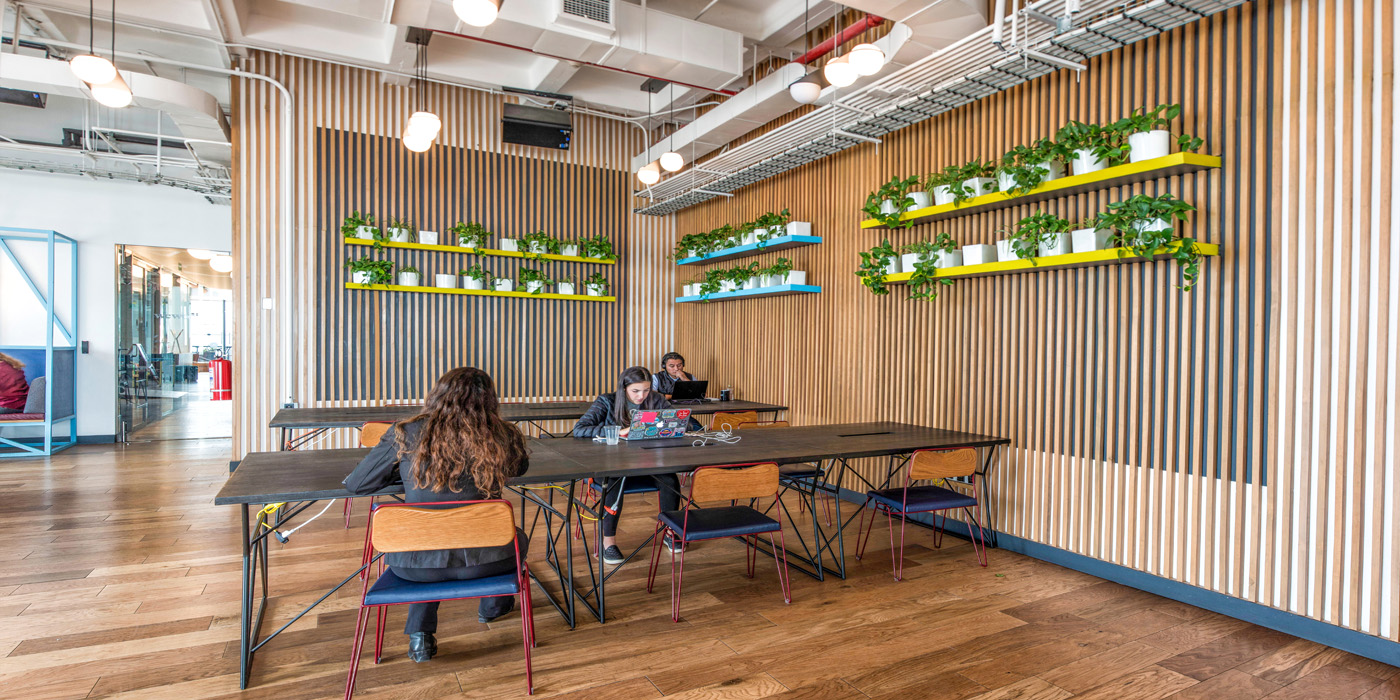
In recent years, companies value interaction with their environment and with companies that can contribute knowledge, not only is internal collaboration between areas sought, synergies with the business environment are sought, which has led in an era of transparency and flexibility to the creation of shared spaces. They are the so-called coworking spaces. These allow different companies to work together, collaborate and form a community, meet in the same workspace, looking for affinities and synergies that allow them to grow. In short, we have suffered many changes in these almost 40 years in the world of spaces destined for offices and this is just beginning.
Having a vision of the future, what will the worker of the future be like?
The work of the future will be based on certain fundamental aspects, among which the digital ecosystems, a new management of talent that is increasingly multidisciplinary and the new operating models that combine both factors stand out.
The new concept “gig economy” is born, where technology and flexibility are the pillars when it comes to this new hiring model.
Alberto García, Director of Catalonia and SSGG
You may also be interested in: Why do companies rent alternative spaces?